
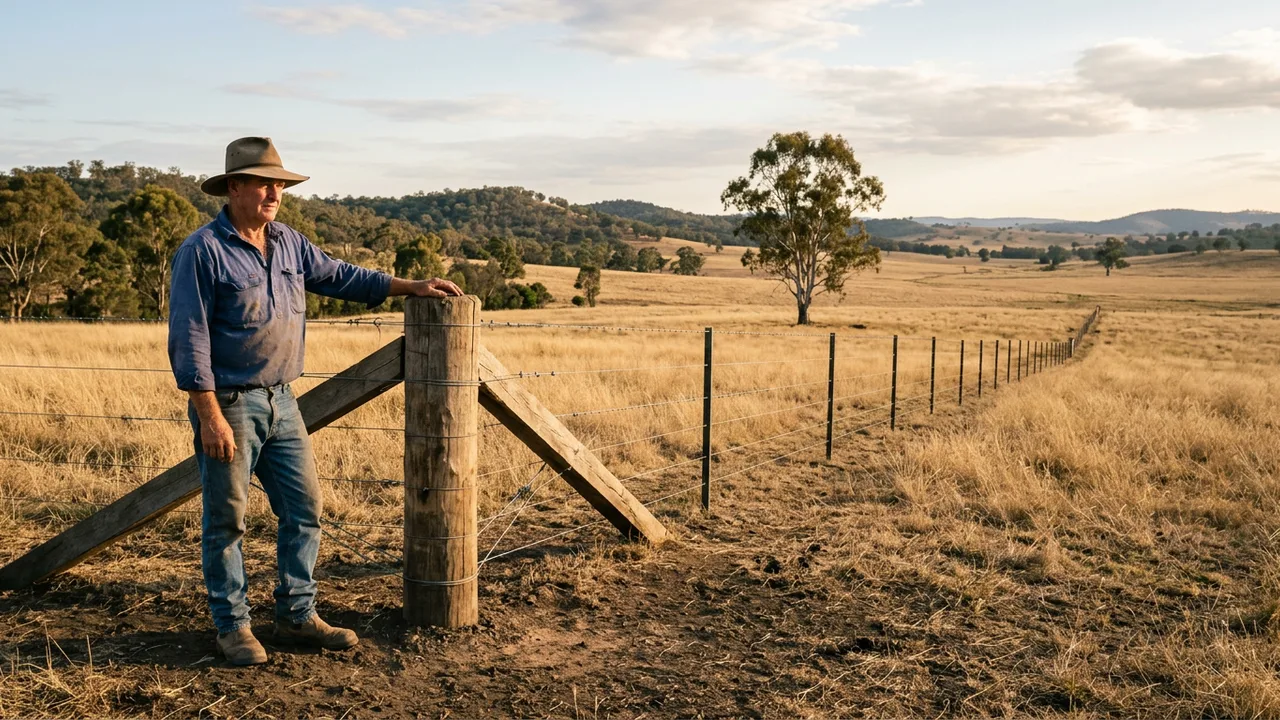
Rural Fencing in Coomera for Acreage and Paddocks
Horses leaning on a tired fence or cattle finding the weak corner? Rural fencing in Coomera means strained wire, firm posts and gates that swing and latch.
If animals need a boundary they cannot push through, the fence has to be built around them: the right wire, posts set to take the load, and gates that close properly. A local fencer builds it to match your stock, your ground and how the paddock falls.
Rural fencing in Coomera: wire, posts and gates for acreage
Paddock fencing suits the acreage and lifestyle blocks on the semi-rural edges of the northern Gold Coast. It does a harder job than a backyard panel. Clay soil and wet season storms soften paddocks that were rock hard a month earlier, and the fence still has to hold a horse that leans and a bull that tests the corner.
A rural fence is a system. Strainer posts at the ends and corners take the load, line posts and star pickets carry the wire between them, and gates give you a way through. When one part is weak, the whole run sags.
On a horse block, the corners and gateways take the most strain, so they get built first and heaviest.
What is the best fencing for cows and horses?
For cattle, strained plain wire on well-set posts with closely spaced star pickets is the usual choice. It is strong, easy to repair and holds up to rubbing and pushing.
Horses need something they can see and will not cut themselves on. Smooth wire, tape or rail systems are common, and barbed wire is best kept away from horse paddocks because a panicked horse can tear itself badly.
Mixed stock changes the answer again. A fencer picks wire spacing and height for the smallest animal you need to hold and the biggest one that will lean on it.
Concrete-set posts and strainers in clay and wet ground
Clay swells when it is wet and shrinks when it dries, so a post that felt solid in a dry spell can rock loose after a week of rain. Posts that are only tamped in can loosen and lean.
That is why strainers and gate posts are often concrete-set, with the hole sized to the load. Line posts and star pickets can then be driven between them, which keeps the cost sensible over a long run.
Slopes and low spots need extra thought. Water running along a fence line can undercut posts, so the fencer adjusts depth and spacing to suit the ground once they have seen it.
Fencing wire, star pickets and galvanised pipe explained
Fencing wire is galvanised, which means it carries a zinc coating that slows rust. Wire gets pulled tight with a strainer so it stays firm rather than drooping.
Star pickets are steel posts with a ridged, star-shaped cross section. They are driven into the ground and suit the stretches between strong end posts.
Galvanised pipe is used where strength matters most, such as gate frames, rails and heavy corner assemblies.
Hinge joint is woven mesh with a flexing knot at each crossing. It gives under impact and then springs back, so it suits calves, goats and animals that push.
Do paddock fences need a QBCC licence?
It depends on the land and the footings. The Queensland Building and Construction Commission (QBCC) exempts a fence made of posts or stakes joined by strands of wire with no concrete footing, whatever its value. Fences on agricultural or pastoral land are exempt as well.
Concrete-set strainers on a residential lifestyle block can change that, so the job may fall under different rules. A good fencer will explain how your particular job is classed before work starts.
What drives the cost of a paddock fence?
Length of run is the biggest factor, followed by the number of gates and strainer assemblies. Each corner and gate adds posts, concrete and labour.
Ground matters next. Rock, heavy clay, steep pitch and wet soil slow the work. Clearing regrowth or pulling out an old fence adds time too.
Material choice counts as well. Hinge joint mesh costs more per metre than plain wire strands, and pipe rails cost more than wire. A written quote shows each part so you can see where the money goes.
What to tell the fencer so the quote is accurate
A quote lands closer to the final job when the fencer knows the length of the run, what stock you keep, where gates should go and what stands there now. Mention whether the ground slopes or floods.
Tell them whether a neighbour shares the boundary, since that can change who pays and what style is used.
Count your corners and gates too, since each one adds a strainer assembly to the price. Rough figures are fine. A paced-out length and a headcount of your stock is enough to start.
How it works
-
Walk the fence line
The fencer looks at the boundary, the stock you run, the gate positions and how the ground falls.
-
Get a priced scope
The quote sets out materials, run length and gates before any work starts.
-
Clear and mark out
Any old fence that is being replaced comes out, and the new line is pegged so corners and gates sit where you want them.
-
Set strainers and posts
Corner and gate assemblies go in first because they hold the tension for the whole run.
-
Run and strain the wire
Wire is threaded, pulled tight and fixed, then gates are hung and checked for a clean latch.
Scope in detail
- Boundary fencing for acreage A strong outer line keeps stock off the road and out of the neighbour's block.
- Paddock subdivision Cross fences let you rest grass and split horses from cattle.
- Gates and entry points Galvanised pipe gates stay square under daily use and latch without a fight.
- Fence repairs and re-straining Sagging wire and leaning strainers can often be pulled back into line.
- Full replacement of old runs Rotted posts and rusted wire reach a point where patching stops paying off.
Rural Fencing options
- Strained wire fencing Plain wire strands pulled tight between posts and star pickets for cattle and general paddock use.
- Hinge joint mesh Woven wire mesh that flexes on impact, suited to calves, goats and keeping smaller animals in.
- Horse paddock fencing Visible, smooth-faced fencing that is kinder to horses than barbed wire.
- Galvanised pipe gates and rails Heavy farm gates and pipe rails for yards, driveways and stock entries.
Rural Fencing across Coomera
Frequently Asked Questions
How long does rural fencing take around Coomera, and can it be built in winter?
How do I repair a broken paddock fence?
Why would a rural fence need replacing rather than patching?
Get it priced
Fence leaning, gate dragging or dog getting out? Get a local fencer onto the job.
Tell us what you need built and get a written quote.