
Fencing and Gates in Coomera
A gate that drags, sags or will not latch ruins a good fence. A local Coomera fencer can hang a new gate to match your fence, or fix the one you have.
Good fencing and gates in Coomera come down to three things: the posts the gate hangs on, the frame that fills the opening and hardware that lines up with the catch. The gate is the part of a fence that moves, so it takes the most wear and shows faults first.
Fencing and gates in Coomera: matching a new gate to the fence beside it
A gate looks right when it reads as part of the fence. That means the same material, the same height and a matching colour or finish. A Colorbond fence with a mismatched timber gate looks like an afterthought.
Where the fence is old, the fencer looks at the end posts before quoting. A new gate hung on a tired post will sag again, so replacing that post is often part of the job. A driveway that falls toward the street also changes how a gate hangs, so the fencer notes the slope when measuring up.
Swing, sliding or automatic: which gate suits your driveway?
A swing gate is the simplest choice when there is clear room for it to open. It costs less than a sliding gate and has fewer moving parts. It struggles on a driveway that rises toward the street, because the leaf can scrape the ground.
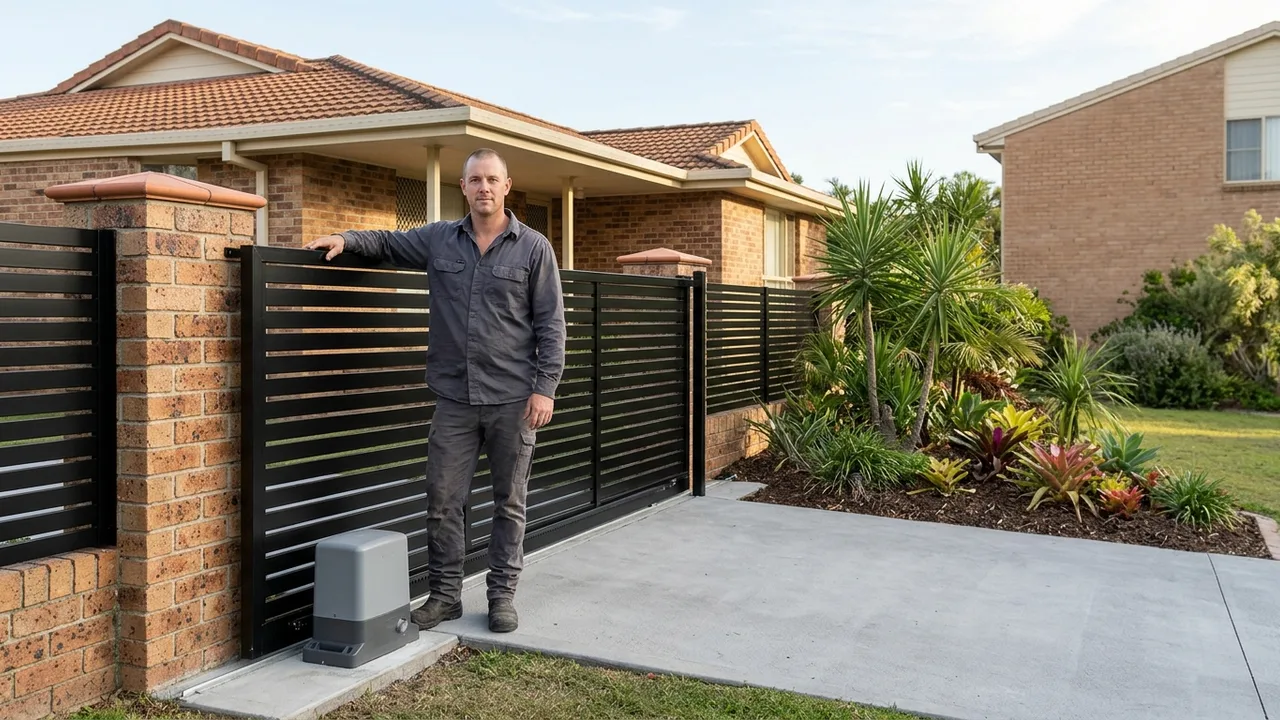
A sliding gate runs sideways along the fence, so it needs a clear length beside the opening. It suits tight frontages and sloping drives. The track has to be kept clear of leaves and dirt.
An automatic gate adds a motor to either type. It suits busy households and anyone tired of getting out of the car in the rain. The motor is chosen to suit the weight of the gate, which is why the gate type is settled first.
Why gates sag and what fixes them
Sagging usually comes from the post, not the gate. When a post leans, the gate drops at the latch end and starts to drag. Loose hinges, a twisted frame and a gate heavier than the fence around it cause the same trouble.
The fix depends on the cause. A loose hinge may only need new fixings. A leaning post needs to be reset or replaced in fresh concrete. A twisted frame is sometimes worth rebuilding and sometimes worth replacing.
The fencer confirms which applies once they have seen the post, the hinges and the frame. Adjusting the latch alone rarely holds if the post underneath is still moving.
Concrete-set posts for gates on clay soil
Gate posts carry far more load than ordinary fence posts, because the gate swings or slides off them every day. Posts set in concrete, and set deep enough, keep the gate square.
On a sloping drive or a newer estate frontage in Upper Coomera or Pimpama, clay and fresh fill can move through the first wet season, and storms add wind load on solid gates. A post set loosely or too shallow shifts in those conditions, and the gate begins to catch. The fall of the drive also decides how high a swing gate must clear the ground.
The concrete needs time to cure before the gate hangs, so a rushed job tends to come back as a sag.
Side gates and pool gates near the house
A side gate keeps dogs and children in, and it is the gate most families use daily. It should swing freely, latch with one hand and sit low enough to the ground that a dog cannot squeeze under.
A gate on a pool barrier follows Queensland pool safety rules. The latch release sits high, out of a small child's reach. A fencer who builds pool fences works to those rules when fitting the gate.
Intercom and remote access for automatic gates
Automatic gates become useful when the controls suit the household. Remotes work from the car. A keypad lets a tradesperson or relative in without a remote. An intercom lets you speak to a visitor before you open the gate.
The motor needs mains power, and a licensed Queensland electrician connects it where required. The fencer then sets the gate so it opens and closes smoothly, because a gate that binds wears out its motor quickly.
What drives the cost of a gate
Gate width and material set the base price. Wider openings and solid materials cost more because they need heavier posts and hardware.
Post work is the next factor. Replacing old posts or setting new ones in sloping ground adds labour. Automation adds the motor, the controls and the electrical connection.
Your fencer gives you a written price before work starts, covering the gate, any post work, the hardware and removal of the old gate. Tell them what is going on with your gate and ask for a quote.
How it works
-
Look at the opening
The fencer measures the gap, notes how the ground falls and checks the posts either side to see whether they can carry a gate.
-
Choose the gate type
Swing, sliding or automatic is picked to suit the space, the vehicles and how often the gate opens.
-
Set the posts and hang the gate
Posts go in concrete, the concrete cures, then the gate is hung, adjusted and tested on its latch.
-
Fit and test automation
For automatic gates, the fencer sets the motor, remotes and intercom once power is in place, then runs the gate through its full travel.
Scope in detail
- Side and pedestrian gates A walk-through gate keeps the path open for people while the driveway stays shut, and it needs to latch with one hand.
- Pool gates A pool barrier gate is built to Queensland pool safety rules, so the hinges and latch are set and tested as part of the fit.
- Hinge types Adjustable hinges let a gate be trued up later, while heavy-duty hinges carry wide or solid gates without twisting.
- Latch and lock options A gravity latch, a self-closing latch or a keyed lock each suit different households, from a dog yard to a shed path.
- Self-closing gates A spring or hydraulic closer swings the gate shut behind kids and visitors, which matters beside a pool or a busy road.
Gates and Automatic Gates options
- Swing gates Single and double gates in Colorbond, timber, aluminium or PVC to match the fence beside them.
- Sliding gates Track or cantilever sliding gates for driveways where a swinging leaf would hit a slope, a car or a wall. A cantilever gate hangs clear of the ground and needs no track.
- Automatic gates Motorised swing or sliding gates with remotes, with the motor sized to the weight of the gate.
- Intercom and remote access Intercoms, keypads and remotes so visitors and family can get in without leaving the car or house.
- Gate repair and realignment Re-hanging, new hinges, new latches and post replacement for gates that sag or will not close.
Gates and Automatic Gates across Coomera
Frequently Asked Questions
How long does a new gate take to install?
Why does my gate sag?
What do I need to tell a fencer about gates before the job?
Get it priced
Fence leaning, gate dragging or dog getting out? Get a local fencer onto the job.
Tell us what you need built and get a written quote.