
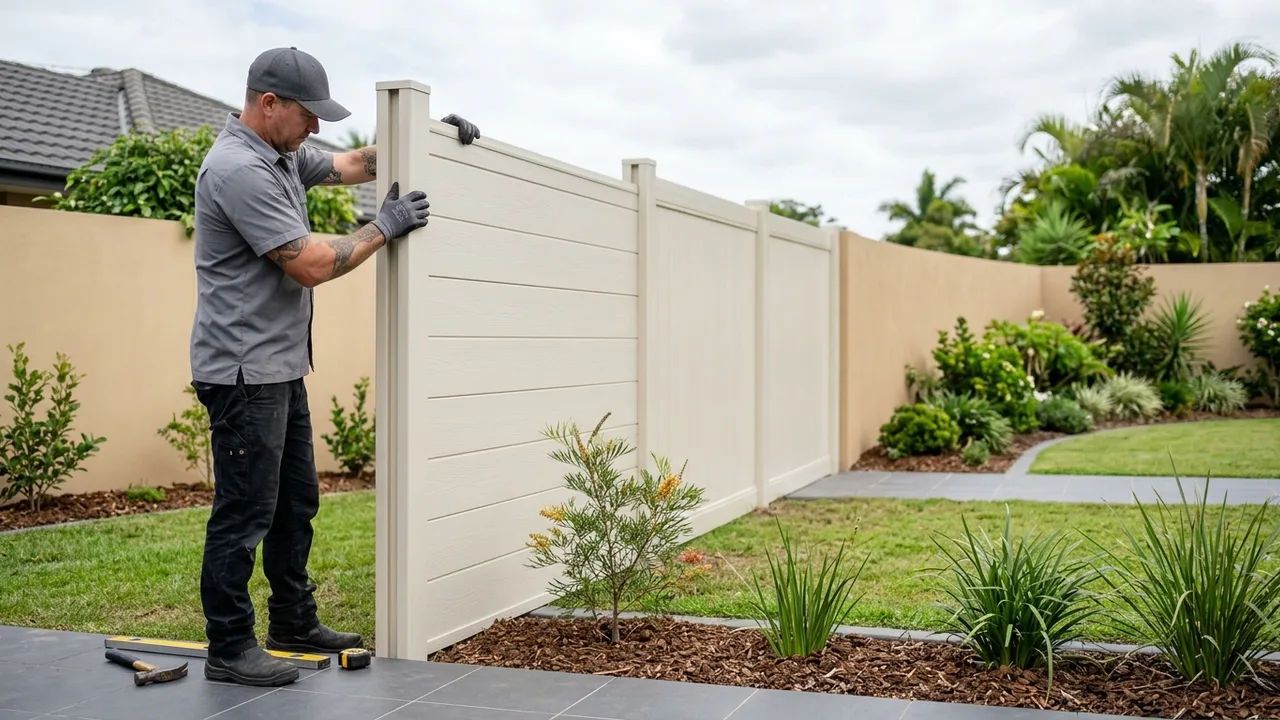
PVC Fencing in Coomera for Low Upkeep Yards
Tired of re-oiling a timber fence that rots at the base anyway? A PVC fence keeps its look with a hose-down, so get your run priced before any work starts.
PVC fencing in Coomera suits a yard where you want a tidy boundary without repainting it or replacing rotted rails every few years. Privacy, picket, Hamptons and post-and-rail styles are all built in PVC or composite. Most PVC fences that fail do so at the posts, not the panels.
PVC fencing in Coomera: is it worth it for low upkeep?
Yes, if you would rather wash a fence than repaint it. PVC does not rot, rust or flake, so the yearly round of sanding, sealing and touching up disappears. In the newer Coomera and Upper Coomera estates, a block on clay or filled ground holds water after a wet season storm. That standing damp is what rots the base of timber posts and rails first, and it is why the footings decide how well any fence lasts.
The trade-off is the upfront cost. PVC usually costs more to buy and install than basic timber, so it pays back over the years you stay in the house. Composite, a blend of timber fibre and plastic, sits in the same low upkeep group and gives a warmer, more timber-like look.
If you plan to sell soon and only need a cheap boundary, a simpler fence may suit better.
Privacy, picket and Hamptons styles
Privacy panels are solid and run board to board. They suit side and rear boundaries where you want a quiet backyard.
A PVC picket fence is the open choice for the front. The gap between pickets and the height decide whether it holds in a small dog or young kids.
Hamptons style fencing adds a picket top, capped posts and a matching gate, which suits a front boundary where you want the house to look finished.
Post-and-rail is the open style for larger blocks and paddock edges. For horses, rail height and spacing have to suit the animal, and the fencer works that out on site.
Composite boards behave a little differently from PVC. Both move with summer heat, so rail ends need small gaps. Composite can lighten in strong sun and show mould in damp shade, while PVC mostly just needs a wash.
How expensive is composite fencing and what moves the price?
Composite and PVC fences are priced by the metre of finished fence, and no honest figure exists until someone knows your run. Five things move the number most.
The first is the length of the run and the number of corners. The second is height and privacy level, since solid panels use more material than pickets. Gates come next, because each one needs heavier posts and hardware. Slope also counts, as it calls for stepped or racked panels. Last is the removal of the old fence.
Against steel or timber, PVC and composite sit higher on upfront price and lower on upkeep. A written quote sets the scope, so you see the full cost before a single post hole is dug.
Posts set in concrete for clay soil and storms
A PVC fence is only as steady as its posts. Clay soil swells when wet and shrinks when dry. That movement can push shallow footings out of line. Posts set in concrete, at a depth that suits the fence height and the ground, hold their line through the wet season.
Storm wind pushes hardest on tall solid privacy panels. Footing size and post spacing matter more there than on a picket fence. Taller or longer runs usually need steel or aluminium reinforcing inside the rails.
On a sloping block, water running down the fall can undercut a footing over time. The fencer reads the slope and drainage on site and sets the posts to suit.
What to ask contractors before they build in PVC
Look for a fencer who installs PVC regularly. PVC expands in summer heat, so an experienced installer leaves small gaps at the rail ends. A builder who has only worked in timber may fit it tight and end up with bowed panels by January. A fair question for any contractor is whether they have built the exact style you want.
Licensing also matters. The QBCC, the Queensland building regulator, licenses fence builders, and licensed fencers do the regulated work. Owners can build their own fence without a licence only in limited cases set out in the QBCC guidance, so a hired job is best left to a licensed fencer.
Mistakes that make a PVC fence sag or bow
Choosing on panel price alone is the first mistake. Thin-walled panels can bow in summer heat, and the posts and footings carry the real strength.
Hanging a heavy gate off a light post is the next one. The gate drags within a season and stops latching.
Ignoring the fall of the ground leaves gaps under the panels, which is exactly where a dog finds its way out. Panels need to be stepped or racked to follow the slope.
How it works
-
Measure the run
The fencer measures the length, corners, gate positions and the fall of the ground, then sets out the style you want.
-
Get a clear price
The quote covers the fence, gates, removal of the old fence and set-up, so you know the cost before work starts.
-
Set the posts
Post holes are dug to suit the soil and fence height, and the posts are set in concrete and left to cure.
-
Fit panels and gates
Rails and panels go in once the footings have set, and gates are hung and adjusted until they latch cleanly.
Scope in detail
- Privacy PVC panels Solid panels hide the yard from the street and the neighbours, which suits a spot for entertaining. If the fence forms part of a pool barrier, it has to meet Queensland's pool barrier rules, and the fencer builds to those.
- PVC picket fences Picket profile and colour are matched to the house trim and roofline.
- Hamptons style fencing Post caps and gate hardware are picked to match, so the front reads as one finished piece.
- Post-and-rail fencing The open rails put less wind load on a long acreage or paddock edge.
- Matching gates Heavier gates get stronger posts and hinges so they do not sag and drag.
PVC and Composite Fencing options
- PVC privacy fencing Solid panels for side and rear boundaries, with reinforced rails on tall runs that take the wind.
- PVC picket and Hamptons fencing Front boundary fences with gate hardware chosen to suit the style.
- Composite fencing Woodgrain-finished boards for a warmer look beside PVC, with the same wash-down upkeep.
- PVC post-and-rail Open rail fencing for acreage edges and larger blocks, in PVC that skips the paint-and-seal cycle of timber rails.
PVC and Composite Fencing across Coomera
Frequently Asked Questions
How long does a PVC fencing project take in Coomera?
What are common PVC fence problems and how are they fixed?
Is vinyl fencing a good choice for durability and low upkeep?
Get it priced
Fence leaning, gate dragging or dog getting out? Get a local fencer onto the job.
Tell us what you need built and get a written quote.